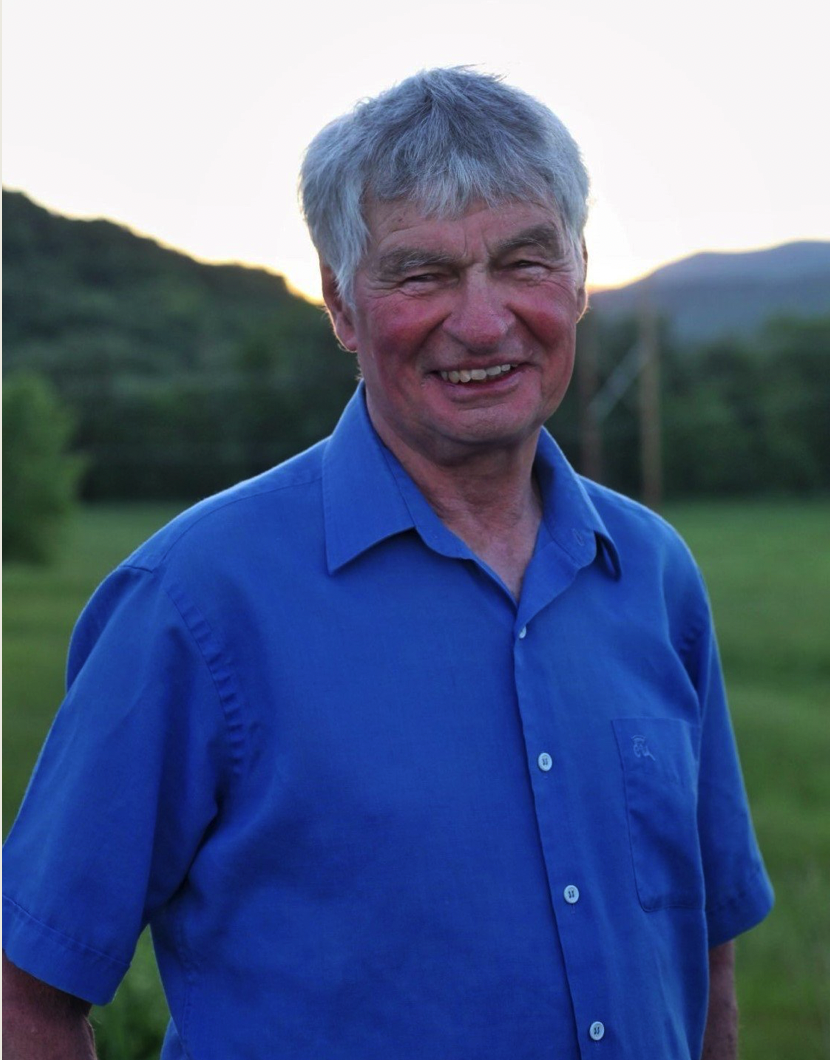
Let the memory of James be with us forever.
Obituary
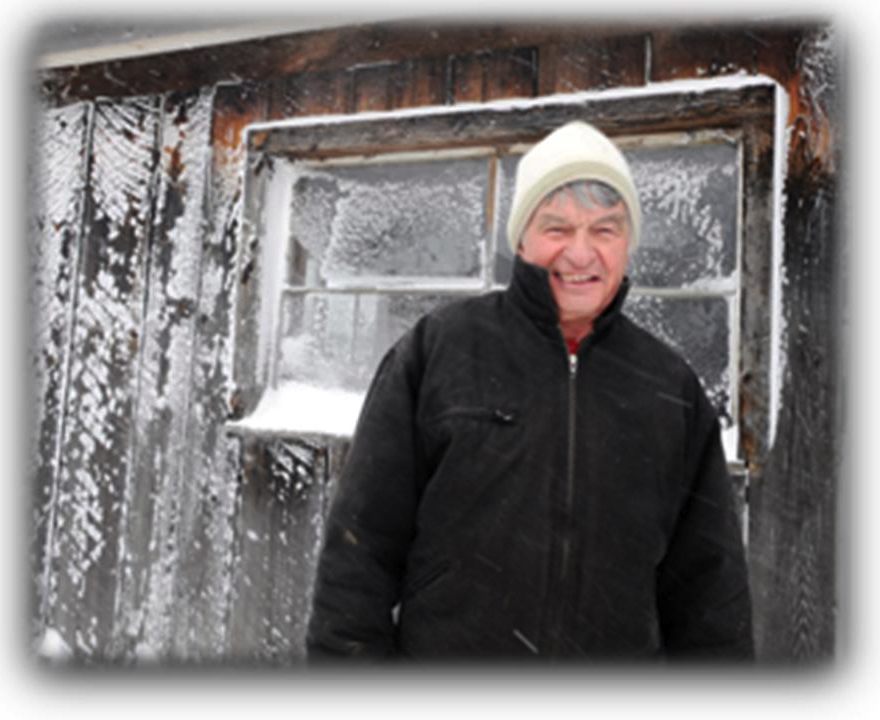
James A. Harvey, 93, a lifelong resident of Duxbury, Vermont, died at home on Tuesday, December 5, 2023.
As an 8-year-old schoolboy, Jim started working for his father who was a farmer and draft horse dealer. By 11, his main chore was to feed, water, and clean up after the horses before they were delivered to their new owners. Never responsible for fewer than six animals, he would get some help if there were 14 or more. Jim had a deep knowledge and love of horses. They were a part of Jim’s life until the end.
Jim took over operation of the Harvey Farm on River Road in the mid-1950s. He married Ellen Ann O’Brien of Waterbury in 1955. They raised eight children though he gave her most of the credit since he worked long days, farming, logging, sugaring, and sometimes racing. Eventually, Jim sold off the cows and worked as a rural mail carrier.
Jim was a lifetime member of St. Andrew’s parish and past grand knight of the Knights of Columbus, Father Galligan Council, in Waterbury. He served as a Duxbury town officer for 13 years on the Selectboard and in other positions. He acted as a representative to the Harwood Union High School Board of Directors for three years.
In 2015, Jim was elected to the Vermont Agricultural Hall of Fame for his contributions to Standardbred Harness Racing in Vermont. He began raising and developing harness horses in 1968. Jim has trained many horses with winning records in a variety of venues including in the Quebec Sire Stakes at the Hippodrome de Montreal and in the New York Sires Stakes. His proudest achievement was raising and training two winners of the Saratoga Horse of Year. One of them, Kelly’s Noah, was inducted into the Saratoga Harness Hall of Fame while he was still actively racing – an unusual honor.
Jim was a true Vermonter from the old school, a good neighbor who would always lend a hand, and a good man respected by everyone who knew him.
Jim’s wife, Ellen, passed away just shy of their 50th wedding anniversary in 2005. He is survived by his children and their families: James G. Harvey and his son James J. Harvey and his wife Serena Harvey; Maureen Harvey; Ann Harvey; Eileen Harvey Baker and her husband Phil Baker; Thomas and his wife Heidi Harvey and their children Zachary Harvey, India Harvey, and McColl Tian and husband Will Tian; Joseph Harvey and his wife Monique Harvey, their daughter Caroline Wright and her husband William Wright; Joan Hale, her daughters Sarah Hale, Maggie Hale and Jessica Hale, her partner LT Norris and their son Sawyer Hale Norris; and Patti Harvey and her husband Tim Marceau and her son Devon Hathaway. Jim is also survived by his younger sisters, Sister Mary Harvey and Helene Harvey, and several nieces and nephews.
A Mass of Christian Burial will be celebrated at 11 a.m. on Saturday, Dec. 16, at St. Andrew Catholic Church, 109 S. Main St., Waterbury. Interment will be private.
Written by: James Harvey 2020 March to May 2020 Written during Quarantine for COVID-19 Nationally
I hope this sheds a little light on my years and time, for whatever its worth.
Chapter One – The Early Years
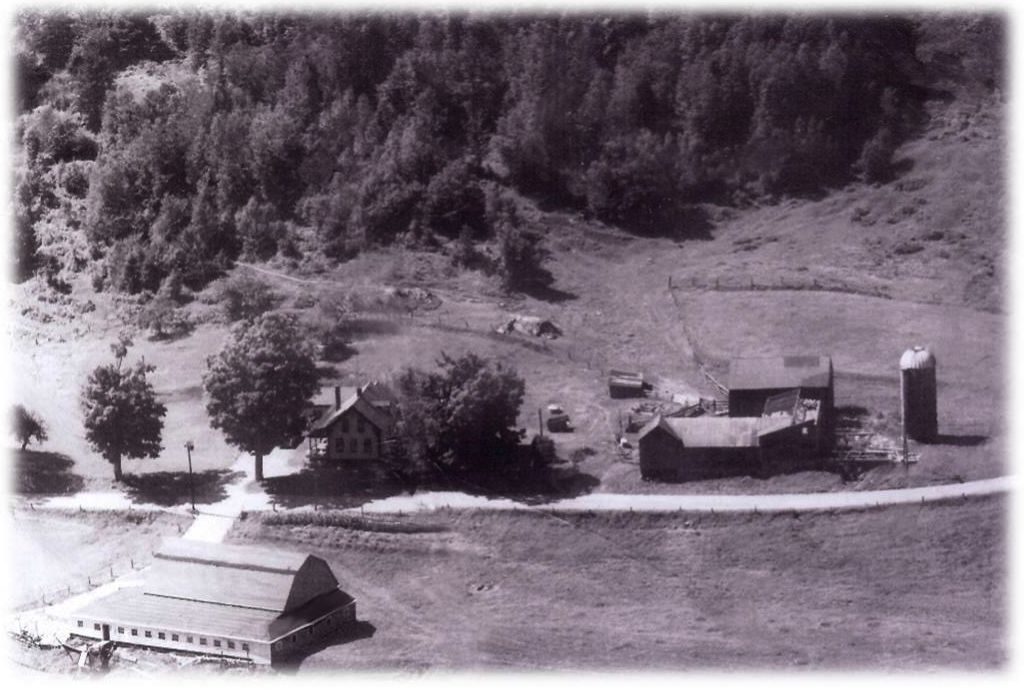
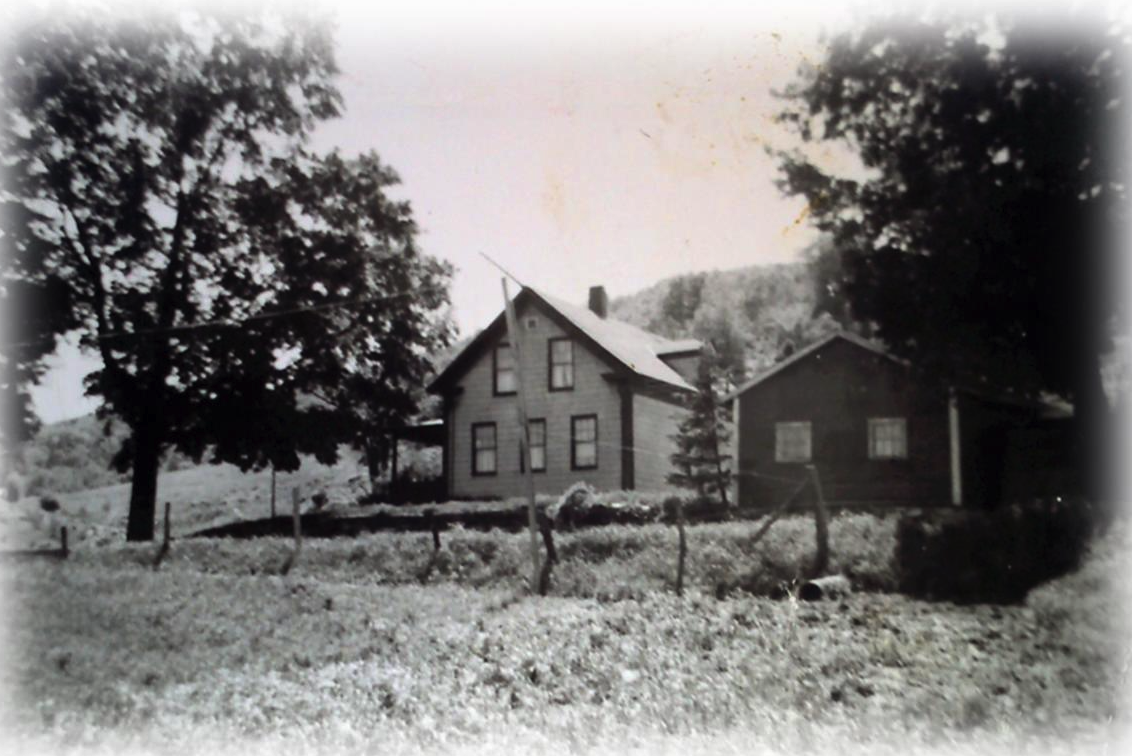
I go back nearly ninety years, most of it spend on this place on River Road in Duxbury, Vermont. It is the Spring of 2020. My father and mother moved here in 1918, so it has been one hundred two years for the family on this farm. My grandfather lived eighty-one years in there their generations we go back before the Civil War.
My grand father and his brother were stone masons, they worked on the construction of the railroad from Vermont to Connecticut. When he returned from that, he had a farm on Woodard Hill in Waterbury of 385 acres. An early master lists him with cattle, horses and sheep.
All of the hill farms at that time were owned by Irish immigrants. There was no valley land available to them. Farms in my time were basically dairy farms, with seasonal work as well. Logging and fire wood in the Winter, sugaring in the Spring with haying about all Summer. We also raised sweet corn and beans for a canning factory in Waterbury.
My father dealt with draft horses and cattle. As I look back on it now the dairy operation was a real slog. We had about the most inconvenient farm ever made. Several small farms had been cobbled together to make one big enough for 60 head of cattle. To top it all off, the milk cooler building was down a ramp then across the farm yard. Everything, silage, grain, bedding and milk had to be picked up and carried. Loose hay was stored in rows, then pitched down and dragged in place for the cattle to eat. Getting in in the rows was also a slog. In the early years it was mowed using a team of horses on a mower. Then turned by hand with a fork to dry. When it was dry enough it was pulled into rows with a dump rake. I was the lucky devil to operate this, high wheels with a row of teeth between that had pedals to hold it down to gather the hay and tripping a mechanism to deposit it in rows going down the field. The first year I did this I was eight years old. It was pulled by a single horse and I never recall any problems with any of them. The hay was then formed into what we called a tumble with a pitchfork. It was then loaded onto a hay wagon with that pitch ford and placed by a loader. When the load got the farm it was unloaded with a hay fork. This was mounted on a track the length of the barn under the peak of the roof. A one-inch rope was attached to a mechanism on the track, through a pulley on the hay fork then the length of the barn through more pulleys and outside of the barn. Alight rope was attached to the hay fork. The load would be placed under the end of the track. The hay fork was pulled to the end of the track where it tripped and the fork came down to the load. That one inch rope kept it from falling away fast. The 4 tines of the fork were bent in such a fashion that when pulled upward they would be drawn to the center of where they were placed and about 30 inches in length. the four tines were pushed down into the hay as far as they would go, spread out as much as possible. The a horse outside would pull that rope running through a pulley on top of the fork raising to the ceiling to the track, it would then roll down the tracks of the barn. When it was where it was to be dropped, the light rope was pulled, tripping the fork and the hay dropped to some lucky devil with a pitch fork to spread in the mow. The fork was then pulled back to the end for another go. As time went on side delivery rakes and loaders came along which did away with all of the pitching from the ground.
In 1955 we went to a tractor with a fast mower, a tedder to dry the hay and a baler to follow that side delivery rake. An elevator was used to move the bales up into the barn and this is how it goes to this day.
The string beans and sweet corn for the canning factory were ripe in the Summer of course and were picked when the owner of the factory wanted them. The corn was delivered as picked. It was shucked then run through a machine that sliced off the ends. The cobs were free to the growers and were fed to cattle. They would be waiting at the gate in the afternoon. No need to go round them up.
Corn silage was the next crop, about ten acres. This was cut and bundled by a horse drawn harvester. Then again through the field with a horse drawn wagon, the bundles were tossed on the wagon by hand or fork. When back at the farm they were tossed in to a chopper by the bundle powered by the tractor with a flat belt pulley. As the bundle was chopped there were some blades to generate an air flow sending the now chopped up corn up a pipe and into a silo. It as then spread out, tapped down to remove any air. Packed into the silo with the moisture from the corn stalks, it was basically a pressure cooker. After about two weeks this as ready to feed as silage. I took the farm over in the mid fifties. I made some changes in the dairy operation with the housing, bulk tank installation, barn cleaner and so forth but after ten years or so I decided that I had enough of dairying and sold the cows. In dairy farming you are moving mountains of manure and hope when you get done there is a little money left.
Chapter Two – Logging
My earliest memories of logging as a young teenager are on the end of a crosscut saw. About five feet in length with a handle on each end., it obviously was pulled back and forth by two people. After the tree was cut down, it would be cut into log length so that they could be handled with hand tools. A horse would pull the log to the log road when it was loaded onto a bobsled. These sleds were hand made by a blacksmith. All the wood in this sled was top grade, straight grained hardwood. The runners were three inch planks shaped by a large band saw. The cross piece was eight by eight also formed by the band saw to allow clearance under the cross bunk. The bunk was attached to the runners with heavy duty pins held in place at the top by handmade irons. The runners were shod with heavy duty metal. Up front the pole for the horse was attached to the front of the runners with heavy duty pins with metal reinforcement all around. Coming down steep hills with a load, the weight would be more than a team could handle. This was solved with runner chains. Chains with extra heavy middle links with lighter, longer links at the ends. This was bolted to the cross pieces on the pole up front. The chain was flipped in the front of the runner then attached to the outside on what was referred to as a “finger.” Handmade, it was to go through the outside links and fasten into a ring. Attached inside and out when the load was hauled forward, the big links would be under the runners at the back. The finger was released by striking the ring that held it in place, clearing it over the end. The sled was pulled by a powerful team.
As for this job my mother had the yard plowed by a guy with a Jeep and plow which at the time was not too common. He plowed the door yard by the house and then proceeded across the road by the barn. The wind had piled up more snow then he could handle, the Jeep was buried. He got out and talked about getting a wrecker to pull it out. One of my brothers had just come home from the woods with a team on a bobsled when I told him they would pull him out he was more than a little skeptical. Well, the team backed up to the rear of the Jeep, a chained fastened around the bunk and to the back of the Jeep. These horses were shod with shoes with drive corks which gave them tremendous traction. When they tightened that chain that Jeep came bouncing out of the snow drift like a bouncing ball. I think that was about as fast as he has traveled going backwards. So much for wreckers.
After the cows were sold, I spent a good share of my time logging. I started out with a medium size bulldozer, later on I acquired a skidder which I used for years. With horses you handle single logs, with a skidder full length trees. Obviously the volume went way up, also the danger with the weight of several trees at a time. Logging ranks with deep sea fishing and under ground mining for danger. I had some close calls but managed to get through without serious injury.
Chapter Three – Draft Horses and Cattle
When I got old enough to know what was going in, my father had been a draft horse dealer for years. He bought them from the Midwest early on, from as far away as Missouri. In my days they were purchased in Montreal. There were two sales barns there, but most come from the Stock Exchange. There would be as many as twenty-five hundred in barns and pens. They were shipped in from farms and ranches in Western Canada. He would pick out what he wanted, sort out the price and buy a truckload of seven or a railroad car of eighteen. He must have been good at picking I don’t recall any of them ever being much of a problem. This would add up to two hundred horses in a year’s time. They were sold to farmers and loggers, tractors didn’t show up much till after World War 2. I was driving a single horse when I was eight years old. When I was eleven my chore was to feed, water and clean up after them. Never had less than six, sometimes as many as twenty-five. When the numbers got above fourteen, I had help.
When they were shipped by the carload they would arrive about three o’clock to a holding area on Railroad Street. They were unloaded down a ramp into a pen there. Often they were coupled together by the halter, anywhere from two to four and led up Railroad Street, onto Stowe Street, then Main to Winooski Street into Duxbury. I don’t recall any problems, leading that many horse through the Village at that time wasn’t a big deal.
After being sold, it was one of the son’s who delivered them. I was nine or ten when my brother Steve had the job. I was sent along too for whatever reason. The only problem was that he usually had two buddies going along also. There was a strict law, only three people on that seat. Therefore, I spend a lot of time traveling Vermont without seeing much countryside, I had to be down and out of sight.
When my time came it was getting to the time when things were slowing down. I remember delivering horses to Bolton Valley when the road was only a wheel track for big trucks. One trip that stands out, I was told to deliver a horse over Orange Heights, just downslope from the top to a wheel track road on the left but not to go up the road. Someone would be there to load the horse back into the woods. I found the road, turned around and parked at the base of the hill. Sure enough, I looked up the slope and there was a guy coming down. I dropped the ramp, unloaded the horse just as he got there, handed him the lead rope and he turned back up the hill. It must have been the right place because I never heard otherwise, but it was the only time I ever delivered a horse without a word being said.
There were some cattle bought and sold but never any from the main dairy herd. The one constant however was Saturdays. Any animals farmers wanted to sell that were not dairy producers were moved on that day. There would always be young calves, any cows not producing, bulls, pigs and sheep. Farmers would bring the calves to the farm, the rest were trucked from the farms. Pigs were the worst to handle. At the time every farm had a metal bushel basket with strong rope handles. The basket went over his head, someone would grab the tail and back the screaming hog up the ramp into the truck. There is something about a hog, when things are going his way he is pretty placid. Convince him to do something he doesn’t want to do results in a screaming fit. After the load was collected, we proceeded to Richmond where the load was sold to Arthur Wortheim. He collected from all over that area and shipped everything by rail car to the Boston area for processing. This was every Saturday, year round.
One day a friend of my fathers from South Royalton showed up with a young bull in his truck. My father thought this a little strange, but he bought the bull. Two days later the County Sheriff showed up looking for the bull. It seems the friend had a dispute with a nephew over money that wasn’t forthcoming so he helped himself to the bull. The bull was returned, the finances straightened out, my father and the Sheriff had a chuckle over that one.
That time it was a common practice for the larger farms to rent pastures and fields on hill farms no longer in production. They were always young cattle a year old and up. If they were pretty much ignored over several months with no one around they sometimes would get pretty wild and tough to round up in the fall. We had some in the Cotton Brook area. The solution to the problems of going wild was a trip back there two or three times a moth with salt. They would be called out, salt spread by the handful on ledges and rocks where they would lick it up. In the Fall rounding them up was no problem. The worst situation was in a pasture in North Duxbury. A young bull went wild there, the only way of collecting him was to hunt him down with a rifle and turn him into beef. That job took two days to accomplish.
Horse were easier to truck than cattle. They were broke to lead, would usually go up a ramp, while cattle hadn’t been led. However, there are tricks to all trades and sooner or later the job got done.
Chapter Four – Sugaring and Vandalism During the years when we were sugaring there was usually snow in November, lots of cold weather in December and January with maybe a January thaw of about three days, then cold in February. The coldest I remember was about ten days when the temperature never went above zero. Late February might moderate a little with the ice breakup in the river around March. The plan was to be tapped and set up when the river ice gave way. We had about 1200 taps. Here again a team would pull a sled with a box on it to hold the buckets and covers. These were placed along the roads in the sugar bush, however many that were needed. If the snow was real deep, just getting through the first time would be a chore. Sometimes the team would be driven around just to break out a track.
Early on the tap holes were bored by hand, someone would follow with the buckets and covers. Later we acquired a tapping machine, a small gas engine mounted on a shelf on a pack board. This had a flexile shaft with a chuck to hold the bit. It also had a auger which was great when it came time to wash the buckets. Lugging those covers and buckets, then early gathering could be a real slog because usually the snow was deep. When you got done sugaring your navel and backbone weren’t very far apart. Once you were set up the box was removed from the sled and a gathering tank holding 240 gallons of sap was installed. The sap was gathered in pails then to the tank. Some of the trees were quite some ways from the sled, gathering was a real chore. Once the tank was full the horse would draw it to the sugar house. It was transferred to a holding tank which would hold several loads. Then it was time to boil, the evaporator was four by twelve feet. A big day of boiling would be about forty gallons or more of syrup. At thirty gallons or more of sap to make a gallon of syrup, that’s a lot of steam. The syrup was drawn off the evaporator, then strained through a felt strainer into a milk can. It would then be taken to the farmhouse and canned, mostly in gallon cans. It was usually all sold to regular customers, total of up to 250 gallons a year.
The sugaring came to end in the mid 60’s. VELCO installed a power line through the sugar bush, a lot of big old trees were dying off but the real killer was vandalism. During the off season of that year, there was a break in, someone pretty well wrecked the place. After the buckets were washed, they were stored in shelves of about twenty. Someone fired a .22 rifle bullet through the bottom of the buckets. The bucket bullet would go about half way down the sleeve, ruining nine or ten buckets with each shot. They also took all the spouts, I never found a one.
Another time I had a big spring of water for the dairy barn. I notice the water showing color, checked out the spring which was 3 feet in diameter and about 5 feet deep. Someone had slid off a heavy cover, taken a branch of rotten wood and pulled the spring tile. Clearing out that wood from that water and then bailing out the water in November wasn’t exactly a fun time.
For a time, I leased the land that is now the Waterbury Recreation Field. Most of it was planted to silage corn, the balance was hay which I bailed and store in the barn that was there at that time. Sometime during the Winter someone broke in, took a knife and cut every bail string they could reach.
The worst was the last. Years ago I build a camp on the height of land by the VELCO line, all these years it was a pleasant place to be with friends and family. Three guys started a fire fifteen feet from the back wall. Whey they left it burned through the grass to the back of the camp, which burned to a pile of metal and ashes.
That was the final straw. I finally posted the land, trying to live and let live came to an end.
Chapter Five – Race Horses
My earliest remembrance of horse racing was being at the Champlain Valley Fair. This would have been in the 1930’sas eh feature race that day was won by a horse name Little Pat. Only years later did I know that he was one of the top two pacers in the country. He set a track record for Essex Junction at 2:01 ½, that was never broken. At that time races were held five day of the week with a sizable crowd each day. The family must have had an affinity for the sport as two brothers eventually went full time and another part time for a lot of years. I went to a USTA training session and received a license as presiding Judge for fairs and non-extended, 10 days or less of para-mutual racing. I worked fairs in Vermont, New Hampshire and Northern New York. From this had offers to work para-mutual meetings but with a large family, traveling around the to tracks didn’t make much sense. I wasn’t all the much interested in that as I was more interested in racing.
In 1968 I purchased two race mares. One a brood mare, the other a 3-year-old filly. The broodmare produced a good horse name Harvey’s Tom and the filly developed into a pretty decent race horse. As the years went by I gave up raising horses and purchased yearlings. I developed a relationship with the people at Angus Farms in Bedford Quebec. They raised and sold about thirty-five yearlings a year. From this group there would be some that I could get at reasonable prices. I would et them going, race them at the fairs as two and three year olds, then look to sell them. The goal was to recover the buying price racing and the sale was the plus end of the deal. From this group came Niagara Angus. He was undefeated for me as a 3-year-old in the New York – Vermont colt stakes, then Hinsdale Raceway, the Blue Bonnet’s in Montreal, where he brought a good price.
In the late 90’s I had raced later than usual and the yearling sales were over. My brother Harry told me about a yearling his son Leo had broken for the owner and she was for sale. Leo told me she was a good forward gaining kind of thing so I called the owner in the Pennsylvania and bought her sight unseen. We agreed to meet on Interstate 84 in Southern New York, he would have her that far. This was Hickory Rockette who was a good horse from day one. It’s tough to ask a horse to be much interested in training alone. So I called Angus Farms to see if he had any left from the sale. He had one on lease which he offered to me but I didn’t want to get involved in that. He recommended I call Canaco Farms in Quebec as they had two fillies’ that had been held out of their sale. When I went to see them they were correct in every way but late foals and real small. I bought them anyway as I was running out of options. With time and feed they grew to a decent size. From this pair came Canacao Kelly.
Hickory Rockette went on to be a strong contender in the Pennsylvania Sire Stakes, finishing second in years’ championship as a 3-year-old. At 4 she won the Battle of Saratoga, I think the only mare to ever win this race. Conaco Kelly was a force in the Quebec Sire Stakes. Always a contender and winning several major races. Kelly’s biggest return was a broodmare. She is the mother of Kelly’s Noah, he has the fastest winning time and the most money won of any horse raised in the State of Vermont.
It is now winding down time but I have a horse named Yatchsman that seems to be developing into a good race horse. Purchased from Winbak Farm he is probably the final chapter. A lot of years, a lot of horses, some outstanding, some decent and some I would like to forget. All memorable.
Chapter Six – Horse Press
Duxbury Trainer Earns Honors By Chris Preston December 20, 2010
It’s only a mile and a couple right turns away from the hustle and bustle of Main Street in Waterbury, but Jim Harvey’s Duxbury horse farm might as well be in the middle of Canada or Kansas. Situated along a bank of the Winooski River off an unassuming windy road, the farm feels utterly isolated, completely cut off from the neighborhoods, shops and restaurants on the other side of the river. Its seemingly secluded surroundings don’t suggest anything spectacular, especially in the dead of winter. Few would guess that the farm is home to one of the most accomplished horse-racing trainers in the country and has been a breeding ground for some of the nation’s top harness-racing horses.
Harvey, 80, is a retired dairy farmer and letter carrier who has lived on the 248-acre farm “since Father Time started turning the clock,” he says. His own father bought and sold draft horses here, but when Harvey and his brother Harry (who now lives in New Jersey) inherited the farm, they found a new use for the horses by building a training track next to the river. Since 1968, Harvey has bred, raised and trained harness-racing horses there. The farm has been in his family for nearly 100 years, and Harvey has spent his entire life there. The track has produced one award-winning racehorse after another. For years, Harvey has entered his horses in harness races — in which the horses pull their riders on two-wheeled carts called sulkies and race in a specific gait (either pacing or trotting) around a mile-long track. Harvey’s horses compete mainly in Saratoga, N.Y., at one of America’s most hallowed horse-racing tracks. Every summer, starting in June, Harvey loads his horses into a trailer and drives them three hours to Saratoga to race against horses from all over the country. The cargo on the trips back to Duxbury often includes a trophy or two. Kelly’s Noah, a 4-year-old standardbred (all harness-racing horses are standardbreds), is Harvey’s latest protégé. With 11 wins in 24 races this summer, Noah, as Harvey calls him, was named the 2010 Horse of the Year at Saratoga Harness. The award was presented at the track’s annual holiday banquet earlier this month. Noah earned nearly $150,000 in winnings this season, more than any non-stakes pacer in Saratoga history. What’s more remarkable is that Noah dominated Saratoga this year despite recurring allergy problems. Noah is allergic to wool, barley and wheat, and was forced to pull out of several races, sometimes after already qualifying for the finals. His allergies weren’t diagnosed until August, after Noah had already blown away the field by running a personal-best of 1 minute, 52 seconds in his second race of the year. Harvey has since stopped using wool blankets for his prize horse, and Noah’s diet now consists mostly of oats.
“He’s one tough customer,” Harvey marvels. Kelly’s Noah isn’t the first Harvey horse to take home Saratoga’s top harness-racing award. Hickory Rockette, a mare, was the 2001 Horse of the Year, only the second mare — a female horse age 4 or older — to earn the track’s highest honor in nearly 30 years. Harvey is the first person to train two different horses to Saratoga’s top harness-racing award. So what’s his secret? How does a dairy farmer from Duxbury, Vt., train horses to win so regularly against such tough competition? Harvey says there’s no magic formula. It all depends on the horse. “Every one of them is different,” Harvey says, standing in his stable between Kelly’s Noah and his four other majestic-looking horses. “Some are calm; others get pretty ramped up. Noah’s pretty laid-back, but once you get him out on the track — boom — he’s gone.” Perhaps the secret to success lies in Harvey’s routine. Harvey keeps his horses on a strict training regimen: They’re fed at 6:30 or 7 every morning, then they jog between 3.5 and 4 miles on the track between 9 a.m. and 4 p.m. before returning to their stalls for supper. Training typically starts in March and goes through Thanksgiving, when Saratoga’s racing season ends. The horses get the winters off, but already seem to be bursting with restless energy; a few of them kicked their stall doors out of jealousy when Harvey let Noah out of his stall. In a couple of months, Harvey will start the training cycle all over again, preparing for his 43rd racing season. He’ll get his younger horses into shape, hoping one of them morphs into the next Kelly’s Noah or Hickory Rockette. Come June, Harvey will load up the trailer and take them all to Saratoga again. Chances are they’ll add a few more trophies to Harvey’s collection. “It gets expensive to train horses,” Harvey says. “It’s not a whole lot of fun to train horses and compete all the time — unless they win.”
MIKE SARDELLA: Kelly's Noah a Cinch for Horse, Pacer of the Year in Harness Racing October 31, 2010
Last year as a 3-year-old, Kelly's Noah was honored at Saratoga Gaming and Raceway's end of the year banquet, named top 3-year-old pacer at the track for his strong 2009 season. It was a season in which the Dream Away colt really came into his own and earned over $70,000 in just 19 starts. While several of the races in the sophomore campaign for Kelly's Noah came in New York Sire Stakes competition, the talented young pacer became a late season open pace contender, even winning the Saturday night feature on a couple of occasions. When he did so, he was quite a long shot, upsetting the upper hierarchy of local pacers, including Rare Jewel, who would be named the track's top pacer for the '09 season at the holiday banquet. As the 2010 racing season began at Saratoga back in March, the open pace once again belonged to Rare Jewel. The veteran millionaire pacer won the feature a couple of times and hit the board on a number of occasions. There were 11 different winners in the first 13 open paces at Saratoga this year and it appeared that there would be no clear cut choice to become the track's top pacer at season's end. That was until owner-trainer James Harvey debuted his stable star Kelly's Noah for the first time of the season in June. Harvey's training style is such that he usually waits until the spring to train his horses down and brings them back in time for summer. This method has worked out just fine for Harvey and local standout Kelly's Noah. Kelly's Noah returned to the track on June 11 for a qualifier and immediately came out strong, wiring the field for an easy win. Though he was a non-factor in the open in his first start back in 2010, Kelly's Noah didn't waste much time asserting himself amongst the track's top pacers. In his second try of the year, he scored a mild upset, prevailing in 1:52.4 in the $16,500 open with Frank Coppola Jr. at the controls. Coppola quickly became the regular reinsman for Kelly's Noah as he could immediately tell that it was going to be a special year for this special 4-year-old. All summer long Kelly's Noah competed against the top competition the track had to offer. He made a habit of besting the local standouts as well as any invader who crossed his path. The sensational pacer has raced hard every week, never getting a breather. To date, every start of the 2010 season for Kelly's Noah has taken place in Open One (the feature) or in the Joe Gerrity Jr. Pacing Series. Displaying weekly grit, ability and consistency, Kelly's Noah headed into Saturday night's open pace earning just shy of $130,000 and on a two race win streak. In the open win two weeks ago, Coppola cut Kelly's Noah loose at the five-eighths pole and breezed by for a :56 final half and a six length victory. The following week, the talented pacer, in the midst of a brilliant junior season, moved right out to the lead and wired the field to record back to back feature jacks. On Saturday, the task would become all the more daunting for Kelly's Noah as the open pace's favorite was assigned the seven post. He would again display his versatility and amazingly move four wide around the final turn for the win. He went from last to first to register his third consecutive feature win and 10th of the season in just 20 tries. Saturday's race was the 50th of the young horse's career and his 22nd win. It is an incredible record for an incredible horse. Kelly's Noah is starting to lengthen his lead in pursuit of the track's top honor, and will be putting the finishing touches on a Horse of the Year and Pacer of the Year season in the coming month. For Kelly's Noah's owner-trainer James Harvey, it would not be the first time he had a horse receive Saratoga's top honor. Harvey's Hickory Rockette was named Pacer of the Year at the track in 2001 and 2002 and Horse of the Year in the '01 season. Hickory Rockette's accomplishments were all the more impressive due to the fact that she was a pacing mare, earning an award usually bestowed to the boys. Hickory Rockette is still the only mare to win the track's top award since 1992.
Kelly’s Noah named Saratoga’s Horse of the Year Monday, December 20, 2010 - by Mike Sardella, for Saratoga Gamimg and Raceway
Saratoga Springs, NY --- For the first time since 2007, a pacer has earned Saratoga Gaming and Raceway’s top honor. Kelly’s Noah was named the 2010 Horse of the Year at the annual holiday banquet at the Holiday Inn in Saratoga. James Harvey owns and trains the 4-year-old, who became a force in the Open Pace this year. A New York Sire Stakes competitor for much of his first couple of seasons, Kelly’s Noah won an Open in the fall of ‘09 as a longshot and quickly became the Saturday feature favorite this year upon starting up his season in June. In Kelly’s Noah’s second race of the year, he and his regular driver Frank Coppola, Jr. prevailed in 1:52.4, a race that would serve as a sure sign of things to come in what would be a historic season for a pacer at the Spa. Kelly’s Noah, in just 24 races, prevailed 11 times and earned just shy of $150,000, more than any other non-stakes pacer in track history. Kelly’s Noah swept the night, winning the awards for top older pacer, Pacer of the Year and Horse of the Year. It is the second Horse of the Year at Saratoga to come from James Harvey’s stable as his Hickory Rockette became only the second mare to win the track’s top award in nearly 30 years.
Saratoga "Hall of Fame" induction June 2015 Back to Home page
Kelly’s Noah The Saratoga Harness Racing Hall of Fame & Museum Announces Its Annual Induction Ceremony/Open House, Tuesday June 9, 2015 at the Museum- 352 Jefferson St, Saratoga Springs, NY.
This year's inductees are Dr. Richard Frank, DVM; and Kelly's Noah, horse.
Kelly's Noah a hard racing pacer has dominated the Open Classes at Saratoga for years, earning the 2010 Horse of the Year Title, among other honors He also holds the record for most earnings per start. See attached bio for more information
Kelly’s Noah
Kelly’s Noah, a bay colt by Dream Away out of Canaco Kelly, was foaled in 2006 at the Harvey family farm in Duxbury, Vt. Owner/Trainer Jim Harvey works the talented gelding on his farm track, starting each year in March or April, as weather permits, patiently training him down for his first Saratoga start in mid-June. It all started in 2008. Upon qualifying Kelly’s Noah for his 2-year-old season, Harvey wanted to give the young pacer a start before the NYSS races began, entering him in a county fair race I Plattsburgh, NY. Jim drove him himself and he won handily to break his maiden the first time out. Kelly’s Noah completed his 2-year-old campaign with a record of 5-2-1 in 11 starts, earnings of over $25,000. and a mark of 1:55.2 Despite battling allergies at 2 and 3, which had to be worked around during the summer racing seasons, Kelly’s Noah capped off his 3-year-old season with a pair of Open Pace wins in the fall at Saratoga with earnings of $70,728. in 19 starts for a record of 7-3-2 on the board, and improved mark of 1:53.4. His efforts earned him the title of 3-year-old Pacer of the Year at Saratoga; it was only a glimpse of what was to come next season. At four, Kelly’s Noah really came into his own, previous years of racing experience allowing him to blossom with age and compete at the highest level at his home track of Saratoga Raceway. He began the year notching 2 wins in 4 Open Pace starts, 2 wins in 3 legs of the Gerrity Open Free for All Series, and a second place finish by a head in the $124,000. Gerrity Series Final. He continued his monster season reeling off another 7 wins and 4 seconds in 14 Open Pace starts. Kelly’s Noah finished his 2010 campaign 11-5-1 in 24 starts, over $153,000 in earnings and a mark of 1:52. His outstanding performance earned him 2010 Aged Pacer of the Year, 2010 Pacer of the Year, and the prestigious 2010 Horse of the Year honors. The rock steady gelding continued his winning ways in 2011, starting 21 times for an 8-4-5 record, $118,000. in earnings, and once again an improved lifetime mark of 1:51.3 earning him Pacer of the Year recognition for the second year in a row. Although making a few less starts per year the past few years, the framework for Kelly’s success continues. Jim gets him ready, qualifies him mid-June, and he competes in the Open Pace or Winner’s Over classes in the summer and fall. Throughout his (now) eight-year career, the outstanding gelding has hit the board 65% of the time, tallying 39 wins in 123 starts and just over $500,000 in earnings. Kelly’s Noah’s most impressive stat is that all but 7 of his 123 starts are at Saratoga Raceway. His Raceway earnings of $475,000+ make him the all-time money earner per start (to date). He is truly a Saratoga Raceway horse.
HORSE SENCE After 40 years, trainer Jim Harvey is still chasing Saratoga glory By MEGAN JAMES
On a recent morning, Jim Harvey steps out of the barn at his Duxbury farm, which his family has owned and operated for the last 100 years — first as a dairy farm and now as a training ground for standardbred racehorses. It’s 8:30 a.m. and the mercury is already edging toward 90 degrees. Harvey’s 6-year-old gelding, Kelly’s Noah — who’s already won $368,093 and was named Horse of the Year at Saratoga Casino and Raceway in 2010 — is cooling off in the barn. His younger two horses, Mountain Rock and Mountain Star, are headed to his track for their morning jog. Harvey’s land, which abuts the Winooski River about three miles from the Bolton Falls gorge, was badly flooded when Tropical Storm Irene tore through the region last summer. He spent a portion of the last year rebuilding the part of his racing track that was destroyed. Now 81, Harvey has been training standardbreds to race in Saratoga and Montréal since 1968. Before that, he was a dairy farmer. And until 1993, he also delivered mail for the U.S. Postal Service. On his farm, Harvey and his wife raised eight children, two of whom are helping out with the horses this morning. While daughters Ann and Patti Harvey drive the horses around the track, Harvey describes the two animals as if he were referring to his children. Mountain Rock, or “Moose,” is enormous — about 17 hands tall — but a bit uncoordinated. He’s a “big baby,” Harvey says with affection. Today Moose is afraid of a large piece of farm equipment parked by the track. Every time he passes it, he rears up his massive head and bugs out his eyes. Mountain Star, or “Socks,” is much smaller and really fast, but he lacks focus, Harvey says. At their young age — both horses are about 3 — it’s too soon to tell if they’ll make the cut as racers. If they don’t, Harvey says, he’ll likely find them homes as saddle horses. “My dad won’t sell them, so usually we just give them away,” says Patti. “He wants to make sure whoever gets them can take care of them. It doesn’t mean that much to him to get money for them. It’s more important that they have a decent place to go.” It’s clear Harvey loves his horses. “Oh, yeah,” says his daughter with a smile. “For racehorses, these are pretty spoiled.” Seven Days caught up with Jim Harvey on the track with his horses to talk training regimen, prize money and the competitive spirit. SEVEN DAYS: Did you grow up with horses? JIM HARVEY: My father bought and sold draft horses from the time we could walk. But the Second World War put the draft-horse business out. As soon as the tractors started coming back from the war, there was no more horse business. SD: What’s their training regimen? JH: Today they’ll only jog seven times around, three and a half miles. Every other day they go counter-clockwise, they go for speed, and you work them down, down, down. The younger horses are down to about 2:20. But to do any good in Saratoga, you have to race under two minutes. These horses, when they get there, will be entry-level horses. And then, if they’re any good, they’ll work their way up the ladder. What about the other one? JH: [Kelly’s Noah] is in the very top level. His best winning time is about 1:51. The best track record ever at Saratoga is 1:50. So he’s been pretty close. SD: Where did he get that name? JH: The month he was born it rained every day but two.
SD: So how much of the prize money do you get if he wins? JH: He’ll race Saturday night for a purse of $18,500. And it’s divided five ways. The winner gets half the purse. Last three get hot and dirty. SD: Hot and dirty? JH: [Laughs] They don’t get any money. SD: Is it a bit of a gamble, then, to make a living off of racing horses? JH: It can very well be, but this horse I have up here now has done very well. He was Horse of the Year in 2010. Eleven wins. Last year he had eight. So he’s done really well. SD: How long are most horses’ racing careers? JH: They can race all the way to 14 [years old], but not very many do. That’s a long haul. SD: So what are the qualities that make a great racehorse? JH: They have to have speed and they’ve got to want to do it. They’ve got to have heart. If they don’t, you’re wasting your time. And then they’ve gotta be determined. This horse up here, if another horse gets near him, he just digs and digs and digs. Unless they’re tougher than he is, he wins. SD: Does a bigger horse have a better chance? JH: Well, he’s got huge strides, but, then again, he might not be so handy doing some things the smaller ones can. SD: How old were these horses when you got them? JH: They were raised here. Their mothers are across the road there. But these are the last two that I’m getting involved in. There’s a three-year process involved. And you can have the best mother and father in the world as far as racehorses are concerned, but with genetics you never know what you’re going to get. You may get a champion, you may get a dud. SD: What do you do if you get a dud? JH: Well, the Amish people buy a lot of them. They’re good saddle horses because they’re well mannered, most of them.
SD: How do you train a horse to win? Is it all just dependent on its natural ability? JH: The biggest thing is patience. If you try to take them where they can’t go before they’re ready to go there, you can ruin them. A lot of the young horses don’t ever make it because somebody gets impatient. It’s like sending a kid to high school when he should be in the eighth grade. SD: When a horse wins, do you think he knows it? JH: Yeah. You take a horse that’s not very competitive, and you can see they get discouraged. It’s like a kid in a running race. After you get whomped about 10 times, you get a little discouraged. SD: Do racehorses have any kind of special diet? JH: Kelly’s Noah is on a special diet because we found out he has allergies. He’s allergic to wheat and, the worst thing, wool. We used to put wool blankets on him. He kept having respiratory problems. SD: How long before you figured it out? JH: When he was at the racetrack, they have a vet there who puts a tiny camera on a tube right up their nose and down their throat, and you could see everything in there. It looked like mayonnaise. The vet said, “I don’t think he’s sick — he has no temperature, no nothing. I think he has allergies.” So we did a blood test, and sure enough. SD: So what does he eat? JH: Rolled oats and a protein-pellet supplement. Usually racehorses are on a pretty high-protein feed. SD: When did you retire from the postal service? JH: I retired in ’93. The first day I could leave, I left. SD: I’m sure this beats delivering the mail. JH: It wasn’t a bad job, but it was a job: 54 miles a day, 550 stops, six days a week. I was in Waterbury, Duxbury, off into Moretown. It was nine hours a day. We used to jog [the horses] at night then. It was a full day. SD: What’s the best part of training racehorses? JH: Oh, when you develop a nice horse like that [gestures to Noah]. And also when you win serious money. Let’s face it: You don’t do all this for nothing. SD: Do you still get excited or anxious before a race? JH: [Pauses] Your whole week is wrapped up in a minute and 52 seconds, and then it’s all over.
Chapter Seven – 89 Years
As I look back on all that time, certain instances stand out to this day. When I was probably about eight at that time, I had barn chores. The chicken house was of the back yard, halfway to the cow barn. There was a large Rhode Island Red rooster bossing the place and every time through he would come after me. This day I was carrying a broom when he came running down I threw it at him as hard as I could. It was spinning end over end horizontally. He saw it coming, just as he turned the handle hit him behind the head at the base of his comb. He dropped like a rock, flat on his back with his feet in the air. My first thought was that I had killed the rooster and how was I going to explain this predicament. After a bit he came back on his feet, staggered around and went back to the hen house. He never bothered me again. I can still see him flat on his back with those feet straight up in the air.
In the Winter growing up we skied up and down the sloped nearby. No lifts. We had lights strung up in the trees so we could ski in the evenings. Equipment was pretty basic. Ash skis with a toe piece and a rubber band to hold it on. Any old boots would do, steering was touch and go. This arrangement was loose but in a fall very little chance of tearing up a knee.
A little bit of skating late in the Winter if water pooled up and froze in the fields. We never went near the river.
For toboggans we used a sheet of metal roofing with the end turned up and a rope attached. My brother Harry built a real toboggan, big enough for four people. Drag it up the packed log road about 2,000 feet, then pile on and ride down. When the road was hard packed, there might be to much speed to make a couple of the corners. Sort out the mess, reset the sled and go again.
Spring and Summer there was fishing, swimming and baseball. The Winooski River was a sewer at the time, the Waterbury Inn had a pond off the road towards Duxbury Corner where we went to swim. At that time Norwich University still had a Calvary Unit. The Summer they would travel from Northfield to Colchester for training with an overnight in Duxbury. The horses were staked out along a flat in the road below the dam. Being a sunny day there were probably forty or fifty guys in various stages of dress or undress around that pond. A lady from Waterbury used to walk her dog that way about every day. Sure enough, she shows up this day with the dog. The pond was pretty well wound up with all those guys dive bombing into the water. I had a suit on so I didn’t care. There was a guy next to me shaving, he reached down for his towel and covered up and kept on shaving. Needless to say, the lady and dog mad a hasty retreat.
One evening an officer came to the house, he and my father listened to radio broadcast of the heavy weight fight with Joe Louis. That was a bid deal back then.
Most of the fishing was on the slopes of Camels Hump for brook trough. The Winooski River was a mess, it is good to see it cleaned up.
Grade school was as Duxbury Corners. A two room school for eight grades. Since it was over a mile to school we traveled with pony and cart back and fourth. There were barns near the school where we left the pony during the day. Four classes to a room, you had your own work, older kids sometimes helping the younger ones and lots of reading. It must have worked, when I was in the 7th and 8th grades we had the top students in the tests for all the students in the district.
High School was a new experience. The first thing was hazing for a week. The Seniors ordered you around, you carried their books, wore your clothes inside out and so on. Try that today. Classes and study halls settled into a rhythm to earn good enough marks to keep your head above water. Sports then were cross country running in the Fall, Basketball in the Winter and Baseball in the Spring. I tried them all, fair to middling in basketball and baseball, my strength was running. Our races started on Winooski Street, then through Duxbury to round 2, the up South Main to the Methodist Church. My best times were under eleven minutes, the best for our team. However there always seemed to be one guy from the opposing teams a little better. One morning about ten o’clock the Principal came to our classroom in my Junior year to tell us that all the boys in the class were going to fight a forest fire where the ice arena is now. We could call home but were to go directly to the fire. At that time the town dump was where the ice arena is now. Someone had started a fire in the dump and it was spreading up the slope. We carried water, whacked at the flames and pretty much had it out by the evening. Then we had to spend the night guarding against a flare up. It was October, leaves knee deep, it seemed cold. We had one flare up which was put out without much trouble We were there twenty on hours straight, all we had to eat was bologna sandwiches. To this day I have never eaten another bologna sandwich.
I was a presiding Judge for racing the Vermont Morgan Horse Association decided to have their first Morgan Horse races. I was asked to preside over this. They had arranged for a track in Jericho. Harness racing has a Judge, clock and three timers. Since no records were involved, I figured one timer would be enough. I enlisted Giles Willey to be the timer. When we arrived on scene they had a flat bed truck set up with chairs for us and the Morgan horse people, including Governor Dean Davis. The first group was three two year olds with obviously little idea what was doing on. I put saddle pad numbers on them and away they go, slowly. By the time they finished they were about 100 yards apart racing a half mile total. The Morgan Horse people were all excited about the first race. I wrote down the order of finish and asked Giles for the time. He looked at his watch then up at me and back to the watch. 2:46 he said, “if the doctor was driving one of these, the baby would have to come by himself.” Later races were a little better, I hope the Morgan Horse people didn’t hear his remark about the doctor.
As I write this it is Mother’s Day. I think back to June 25, 1955. I married Ellen O’Brien that day, we had just three months’ shy of fifty years. A devoted wife and mother by any measure. I give her most of the credit in raising the family. I was working long days, sometimes racing at night. My longest session was from 6am one morning to 2am the next day Not a lot of help around the house. However, there were times with family and friends that made life something other than work. We had a camp back in the woods, time there as they say, restores the soul. Although she is gone now, I am sure here children appreciate her time, effort and example she set for many years.
As I close out it seems that family and friends are the glue that holds life together. Sometimes you have to forget and forgive, life goes on to a better place. I recall a saying my father had a saying, you had to lives two live to know how to live one. Amen to that.
I hope this sheds a little light on my years and time, for whatever its worth.
Resting place · Holy Cross Cemetary, Duxbury, Vermont
Honor James
A gesture of sympathy in their memory.
Photos & media
View gallery ›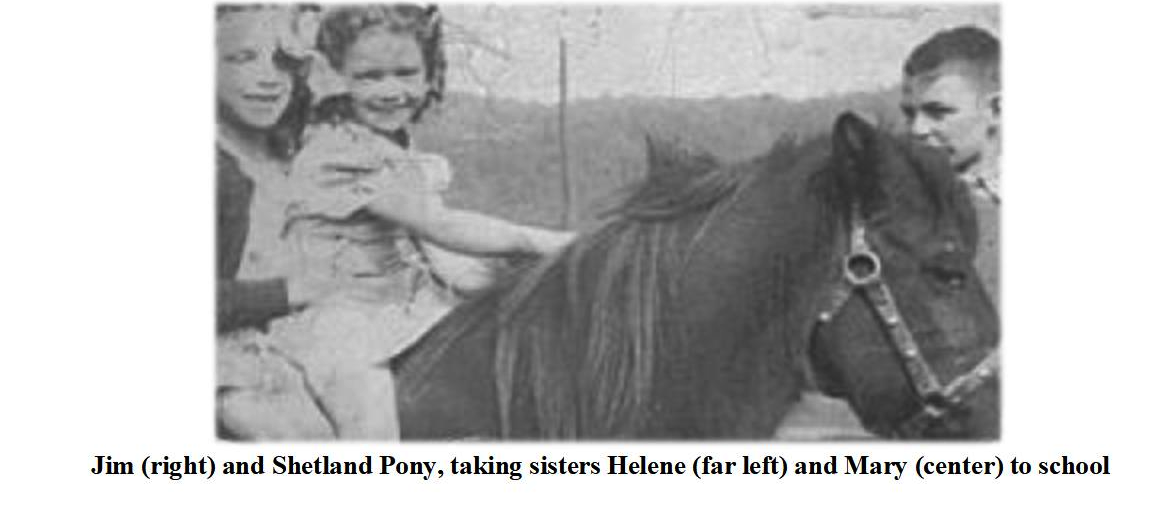

Tributes
Be the first to leave a tribute.